
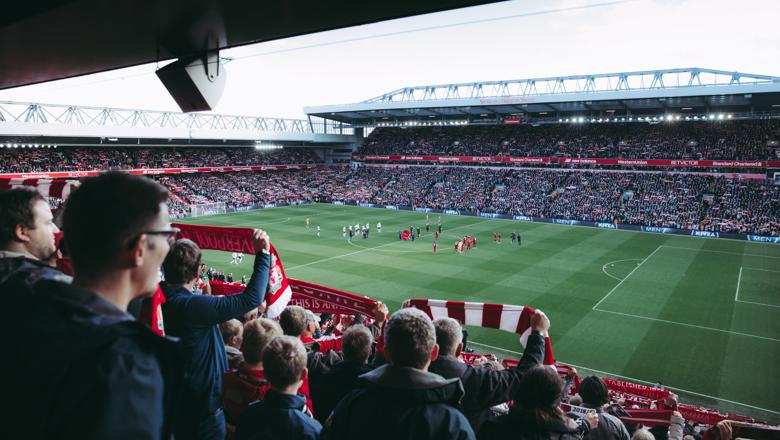
Sports Match Atmosphere is more than sound, lighting, crowd size or stadium noise — it is an emotional climate that players often absorb before they even step onto the field. Long before the ball is in play, adrenaline begins to rise because the body reacts to environment before it reacts to strategy. This is why a packed stadium can feel like a living organism — one that either fuels athletes with confidence or traps them inside psychological weight.
When an arena is charged with energy, the match turns into a stage where emotion becomes momentum. The louder the crowd, the more alive a moment feels. Players begin to sense not just the game, but the mood of the audience. That invisible current begins to either accelerate performance or interfere with rhythm depending on how prepared an athlete is to process pressure. (Sports Match Atmosphere)
Home Advantage Rooted in Emotional Familiarity
Coaches often talk about home advantage in technical terms, but much of it is emotional comfort disguised as tactical benefit. Players feel protected by the crowd, supported by reassurance, and guided by noise that feels like belonging. This comfort reduces hesitation, which makes decision-making quicker and more instinctive. (Sports Match Atmosphere)
Even before the contest begins, warm-up drills feel easier because the athlete senses support rather than surveillance. Confidence does not always come from the jersey — sometimes it comes from the air around it.
Why Sports Match Atmosphere Can Influence Body Language and Mindset
In many high-stakes contests, body language becomes an echo of the crowd’s tone. A roaring audience lifts shoulders, sharpens walking stride and raises eye contact. The mind feels permitted to express aggression rather than hide from mistakes. Conversely, a hostile audience forces players to shrink into themselves. They become quieter internally, spending more energy on mental filtering rather than strategy. (Sports Match Atmosphere)
It is not always the noise itself that affects performance but the meaning behind it. A cheering crowd amplifies belief, while a jeering crowd challenges identity. Players who understand this translation play through noise rather than against it.
Emotional Temperature and Performance Rhythm
Every match has a pulse shaped by spectators. The tempo is not controlled only by tactics — it is shaped by energy release in the stands. A sudden cheer after a boundary or steal can shift momentum like a wind gust pushing a sail. Moments turn faster because the athlete feels the emotional endorsement behind every action.
When the audience grows tense, rhythm often tightens. Players pause slightly longer, breathe shallower and think harder. The emotional temperature of the stadium becomes a subtle governor on performance speed. (Sports Match Atmosphere)
Silence as a Different Kind of Pressure
People assume silence is neutral, but in sport it can be louder than applause. A silent ground can feel like a test of self-trust. No external validation means no emotional cushion. A mistake becomes heavier when it falls into quiet air. Some athletes love this purity of focus, while others feel emotionally deserted.
It is here that internal voice replaces the crowd’s voice. Athletes with strong inner communication thrive, while others begin doubting their instinct. (Sports Match Atmosphere)
Confidence That Feels Borrowed from the Crowd
When tempo rises and the crowd begins to believe, athletes start performing with borrowed momentum. Their risk-taking becomes sharper, their reactions more fluid, and their recovery faster. It is not simply excitement — it is psychological sponsorship. The player feels lifted. (Sports Match Atmosphere)
This is visible during comebacks. The crowd begins to sense possibility before the scoreboard confirms it, and the team rides that emotional forecast into execution.
Pressure That Converts Into Hesitation
Just as energy can accelerate performance, it can also freeze it. A packed stadium sometimes creates too much self-awareness. Instead of playing naturally, a player begins assessing what thousands of eyes are expecting. This is when decision-making becomes cluttered. The athlete spends half a second overthinking, and that half second becomes the difference between instinct and error. (Sports Match Atmosphere)
The biggest challenge is not the noise — it is the inner echo of expectation.
Small Gestures That Break the Noise Barrier
Some athletes have rituals that reset their emotional baseline. A goalkeeper bouncing gently on the spot before a penalty, a cricket batter tapping the crease twice, a basketball shooter breathing out before release — these are not mechanical gestures but emotional recalibrations. They tell the mind: “ignore the storm, return to rhythm.”
A player who controls rhythm eventually controls outcomes.
Adrenaline and Muscle Memory Working Together
The louder the arena, the more adrenaline floods the body. This is powerful when the athlete has solid muscle memory because adrenaline sharpens reaction time. But if technique is shaky under pressure, adrenaline exposes inconsistency. The crowd is an amplifier — it magnifies both excellence and doubt. (Sports Match Atmosphere)
This is why some players become “big match performers.” They are not immune to nerves — they are supported by repetition that stays stable even when pressure spikes.
Atmosphere Turning into Strategy
Coaches and captains often use crowd rhythm tactically. They delay substitutions to spark anticipation. They encourage set plays when the stadium is rising so that the atmosphere acts like a sixth player. Some even use silence strategically by slowing gameplay to cool the opponent’s emotional surge.
This is when the environment itself becomes part of the tactical blueprint — not just decoration around the game.
When Athletes Feed the Crowd and the Crowd Feeds Them Back
The loop of energy between athlete and spectators is what turns sport into a shared theatre rather than a technical display. A clenched fist toward the stands, a roar after a breakthrough moment, a quick salute — these are emotional transactions. The atmosphere stops being an audience and becomes a partner. (Sports Match Atmosphere)
A performance in isolation is skill; a performance with a roaring backdrop is spectacle — and it is that atmosphere which often decides whether a moment becomes legendary or just statistically impressive.
Read also:
croatia national football team vs france national football team lineups
argentina national football team vs bolivia national football team
mexico national football team vs honduras national football team
france national football team vs croatia national football team lineups
