
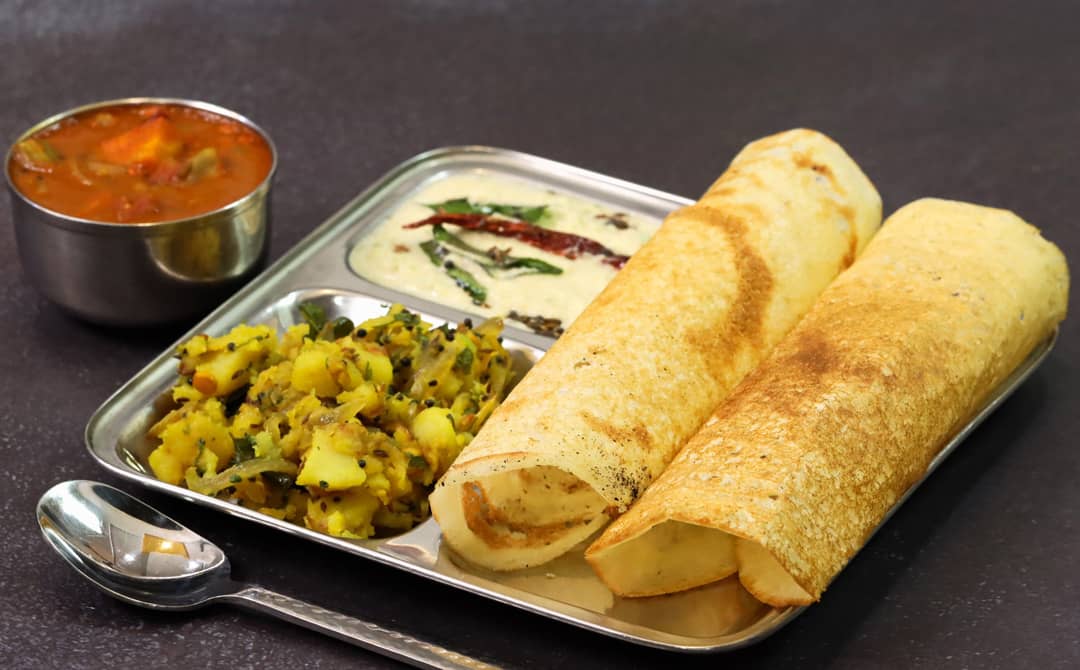
Masala Dosa Recipe is often the first introduction many people have to South Indian cuisine. The crisp golden dosa, paired with soft potato masala and coconut chutney, feels comforting yet exciting at the same time. From roadside stalls to five-star hotels, masala dosa carries the same charm everywhere.
Many families still remember weekend mornings when dosa batter was fermented overnight and breakfast felt like an event.
The cultural journey of masala dosa
Masala dosa originated in Karnataka and gradually spread across South India. Over time, it evolved from a simple dosa into a layered dish with spiced potato filling.
Food historian K. T. Achaya described dosa as one of India’s earliest fermented foods, making it both traditional and scientific.
Why masala dosa connects emotionally
Masala dosa is not rushed food. The fermentation, preparation, and roasting require patience. That effort translates into taste.
Chef Sanjeev Kapoor often mentions that dosa is about rhythm, not speed.
Table: Important elements of an authentic masala dosa
| Element | Description | Role in Taste | Expert Insight |
|---|---|---|---|
| Rice & Dal | Fermented batter base | Texture and crispness | VahChef Sanjay Thumma |
| Potatoes | Boiled and spiced | Comfort and body | Ranveer Brar |
| Ghee | Used while roasting | Aroma and crunch | Sanjeev Kapoor |
| Fermentation | Natural process | Flavor depth | Kunal Kapur |
| Chutney | Coconut-based | Balance | Tarla Dalal |
Understanding dosa batter fermentation
Fermentation is the soul of dosa. Rice and urad dal break down naturally, creating air pockets that help dosa turn crisp and light.
Temperature and time play a huge role. Experienced cooks read batter texture, not the clock.
Why the potato masala matters
The masala filling gives dosa its identity. It is mildly spiced so it does not overpower the dosa or chutney.
Ranveer Brar often emphasizes balance over heat when cooking masala dosa filling.
Spice tempering creates aroma
Mustard seeds, curry leaves, and green chilies release aroma when tempered correctly. This step defines the fragrance of the masala.
Skipping proper tempering results in dull flavor.
Regional variations of masala dosa
Mysore masala dosa is spicier with red chutney inside. Tamil Nadu versions are lighter and crispier.
Each region adapts the dish while respecting its essence.
The art of spreading dosa batter
Spreading batter evenly requires practice. The circular motion helps create uniform thickness.
Street vendors master this skill through repetition, not measurement.
Cooking temperature decides texture
A hot tawa gives crisp edges. Low heat leads to soft dosas.
Chefs advise testing the tawa temperature before every dosa.
Ghee versus oil debate
Traditional dosa uses ghee for aroma. Oil is often used for convenience.
According to Tarla Dalal, ghee elevates dosa flavor without making it heavy.
Pairing dosa with chutneys
Coconut chutney adds sweetness. Sambar adds warmth and depth.
These sides complement, not compete with dosa.
Learning from South Indian kitchens
In many South Indian homes, dosa batter is sacred. Families protect their fermentation methods.
This knowledge is passed down through observation.
Why restaurants taste different
Restaurants use higher heat and seasoned tawas. This gives consistent crispness.
Home kitchens focus more on comfort and balance.
Nutritional view of masala dosa
Dosa provides carbohydrates and protein. Potato masala adds energy and fiber.
Balanced portions make it suitable for daily meals.
Common mistakes beginners make
Under-fermented batter leads to flat dosas. Overloading masala breaks the dosa.
Awareness prevents disappointment.
Practice improves consistency
Repeated cooking builds muscle memory. Batter spreading becomes instinctive.
Confidence grows with every dosa.
Modern appliances and masala dosa
Non-stick pans and blenders simplify the process. However, technique still matters.
Technology assists but does not replace experience.
How Masala Dosa Recipe adapts globally
Masala Dosa Recipe has crossed borders. International kitchens adapt ingredients but keep technique.
Its versatility makes it globally loved.
Family traditions built around Masala Dosa Recipe
Masala Dosa Recipe is often a Sunday ritual. Families gather around the stove.
These moments build emotional connection with food.
Why beginners trust Masala Dosa Recipe
Masala Dosa Recipe rewards patience more than expertise. Small improvements show big results.
This encourages beginners to keep trying.
Personal touches in Masala Dosa Recipe
Masala Dosa Recipe changes with household preferences. Some add onions, others skip them.
Customization keeps the dish personal.
Street food influence on masala dosa
Street vendors add flair through speed and heat control. Their dosas inspire home cooks.
Observation becomes education.
Respecting tradition while experimenting
Innovation works best when tradition is respected. Masala dosa allows creativity without losing identity.
This balance keeps the dish timeless.
Why masala dosa never feels outdated
Despite modern food trends, dosa remains relevant. It adapts without losing soul.
Few dishes achieve this longevity.
The satisfaction of perfect dosa at home
When dosa turns golden and crisp, it feels rewarding. That success motivates further cooking.
Food becomes joy, not pressure.
Masala dosa as a symbol of South Indian hospitality
Serving dosa to guests reflects warmth and care. It represents simplicity done right.
This philosophy defines South Indian cuisine.
Read also:
